Albino Discus
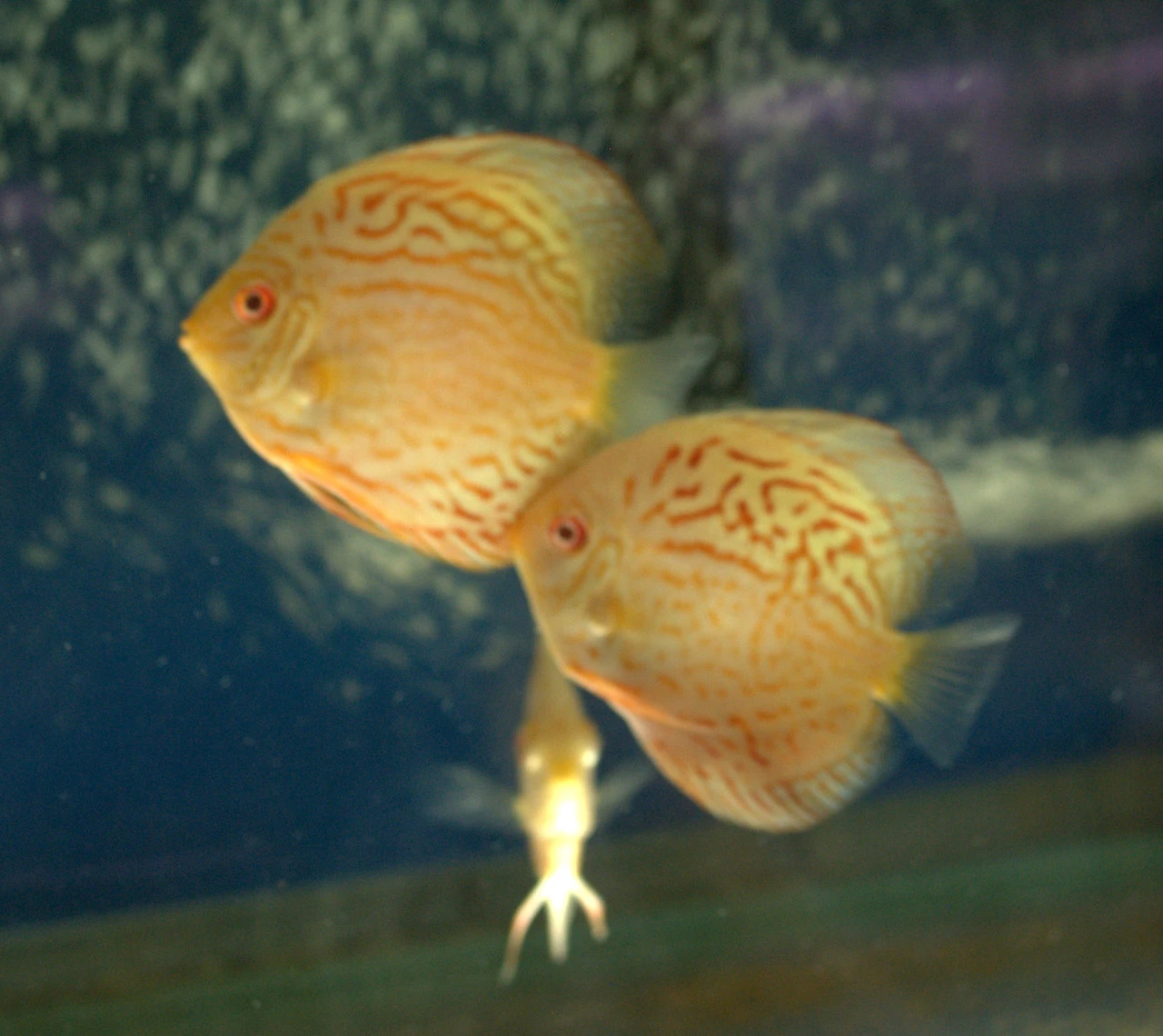
- Size: 6–8 inches (15–20 cm) as adults
- Tank: 55 gallons minimum for a group, tall (20"+ height), dimmer lighting appreciated
- pH: 6.0–7.2
- Temperature: 82–86°F (28–30°C)
- Hardness: Soft to moderate (2–8 dGH)
- Temperament: Peaceful, shoaling
- Difficulty: Intermediate to advanced
Overview
Albinism in discus is a recessive genetic trait, not a strain in the way Red Turquoise or Checkerboard are — it's a lack of dark pigment (melanin) that can express on top of several different color and pattern backgrounds, which is why you'll see albino discus sold under compound names combining "Albino" with an underlying strain. The reliable tell for true albinism, distinguishing it from a superficially similar strain like White Diamond, is the eye: albino discus have red or pink eyes from the same lack of pigment affecting the body, where White Diamond retains normal dark eyes.
Because the trait removes dark pigment rather than adding color, albino fish tend to look softer and more pastel than their non-albino counterparts of the same underlying strain — a genuinely distinctive look in the hobby, and one with a small but dedicated following.
Albino Blue Diamond
The albino trait expressed on Blue Diamond genetics — rather than the deep metallic blue of a standard Blue Diamond, the result is a much paler, silvery-blue-white body with the telltale red eye.
Albino Pigeon Blood
Albinism layered over Pigeon Blood genetics, producing a pale, faintly stippled body where a standard Pigeon Blood would show bold red-orange spotting — the pattern is present but heavily muted by the absence of dark pigment.
Albino Sunshine Golden
Albinism on golden/orange-based genetics, producing a warm, glowing pale gold-to-cream body that reads as one of the softer, more luminous albino color forms. See the Golden & Sunshine guide for the non-albino version of this base color.
Tank Setup & Water
- Tank: Standard discus baseline — tall, 55 gallons minimum for a growing group.
- Lighting: Albino discus (like many albino animals) can be slightly more light-sensitive than pigmented fish; moderate rather than intense lighting is a reasonable, low-cost precaution, alongside plenty of cover to retreat to if desired.
- Water chemistry: Standard discus range — 6.0–7.2 pH, 82–86°F.
Feeding
Standard discus diet — quality pellets as the staple, with beef heart mix and frozen foods in rotation, per the feeding guide. Color-enhancing foods have limited effect here given the lack of dark pigment; focus on general nutrition and growth instead.
Temperament & Compatibility
Standard discus social behavior — peaceful, shoaling, best kept in groups of six or more, fully compatible with the usual Amazon-biotope tankmates. No behavioral differences from pigmented discus.
Breeding Notes
Albinism is recessive, so pairing two albino discus reliably produces albino offspring, while pairing an albino with a non-albino carrier can produce a mix of albino and normally-pigmented fry depending on the non-albino parent's genetics. Otherwise, standard discus pairing, spawning, and parental slime-feeding apply — see the breeding guide for the full cycle.
Common Issues
No albinism-specific health issues beyond a somewhat greater light sensitivity — see the lighting note above. Beyond that, albino discus are subject to the same general discus health issues covered in common diseases.
Where to Get Quality Fish
Confirm which underlying strain the albino trait is expressed on (Blue Diamond, Pigeon Blood, Sunshine Golden, or another base) so you know what to expect as the fish matures, and check for the characteristic red/pink eye to confirm true albinism. Pet Zone SD stocks albino color forms when available. See our sourcing guide for general buying advice.
Cost: Typically similar to or slightly above the underlying non-albino strain, given somewhat lower availability.
Final Thoughts
Albino discus offer a genuinely distinctive, softer aesthetic within whatever base strain they're paired with — a good pick for a keeper drawn to the pastel, luminous look rather than the bold saturated colors most farm strains chase.
Albino Discus FAQ
How do you tell true albino discus apart from White Diamond?
Eye color. True albino discus have red or pink eyes from a lack of pigment; White Diamond, which can look superficially similar in body color, retains normal dark eyes.
Is albino discus a separate strain?
No — albinism is a recessive genetic trait that can express on top of several different underlying strains, which is why you'll see it sold under compound names like Albino Blue Diamond, Albino Pigeon Blood, or Albino Sunshine Golden.
Do albino discus need special lighting?
Albino discus can be slightly more light-sensitive than pigmented fish, similar to many albino animals. Moderate rather than intense lighting, plus some cover to retreat to, is a reasonable, low-cost precaution rather than a strict requirement.