Lemon Yellow Discus
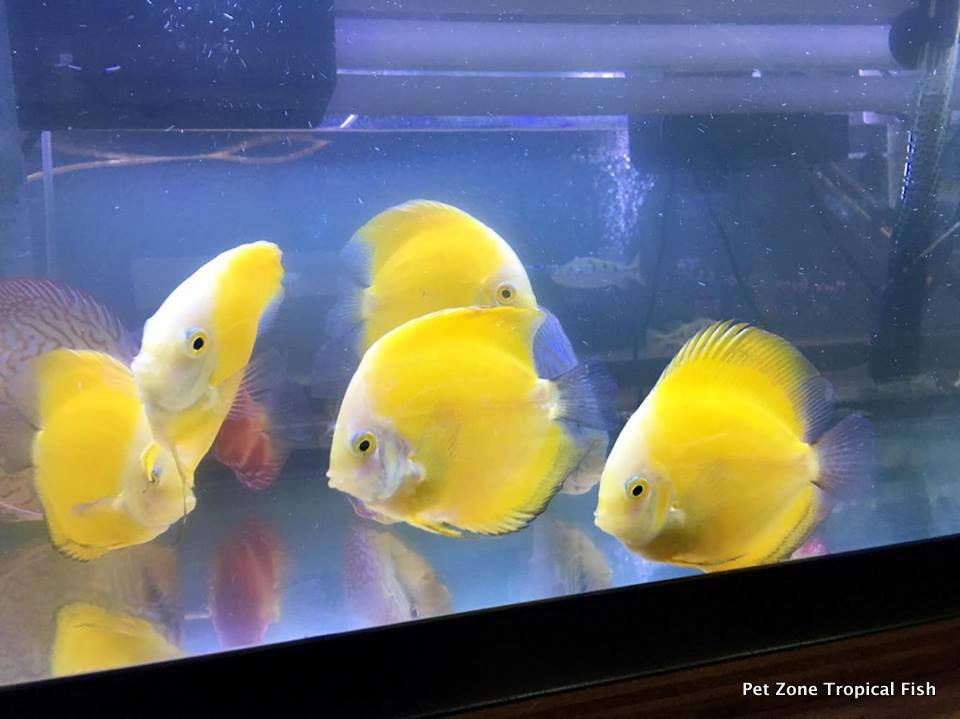
- Size: 6–8 inches (15–20 cm) as adults
- Tank: 55 gallons minimum for a group, tall (20"+ height)
- pH: 6.0–7.2
- Temperature: 82–86°F (28–30°C)
- Hardness: Soft to moderate (2–8 dGH)
- Temperament: Peaceful, shoaling
- Difficulty: Intermediate
Overview
Lemon Yellow is a bright, cheerful farm strain built around a clean yellow tone, typically concentrated most intensely around the face and forward body and softening toward a paler yellow-white further back. It sits in the same general color family as the Yellow Pigeon color form — a yellow-based variant of the pigeon-pattern lineage — and the two are sometimes used interchangeably by sellers, though a true Lemon Yellow tends to show cleaner, less stippled color than a Yellow Pigeon's characteristic light peppering.
This is one of the more approachable color strains to keep well — the yellow tone is comparatively forgiving of minor water-quality lapses compared to the deepest solid reds or blues, though "forgiving" here is relative to other discus, not a suggestion that Lemon Yellow tolerates neglect.
Tank Setup & Water
- Tank: Standard discus baseline — tall, 55 gallons minimum for a growing group.
- Substrate: Either bare-bottom or planted works well; a mid-tone or darker background shows the yellow off well without washing it out.
- Water chemistry: Standard discus range — 6.0–7.2 pH, 82–86°F.
Feeding
Standard discus diet — quality pellets as the staple, with beef heart mix and frozen foods in rotation, per the feeding guide. Spirulina-inclusive foods are often credited with supporting a cleaner, brighter yellow tone specifically, though clean water matters more than any single food choice.
Temperament & Compatibility
Standard discus social behavior — peaceful, shoaling, best kept in groups of six or more, and fully compatible with the usual Amazon-biotope tankmates. A bright, warm-toned addition to a mixed-strain display alongside cooler blues and turquoises.
Breeding Notes
Standard discus pairing, spawning, and parental slime-feeding — see the breeding guide for the full cycle. Because Lemon Yellow and Yellow Pigeon genetics overlap, expect some variation in offspring pattern and clarity even from a clean-looking pair.
Common Issues
No strain-specific health concerns beyond the general issues covered in common diseases. Dulling or a muddier yellow than usual is more often a water-quality or stress signal than illness — check parameters first.
Where to Get Quality Fish
Look for clean, bright yellow without excessive stippling if you specifically want Lemon Yellow rather than Yellow Pigeon, plus the usual signs of good health — full body shape, active feeding, undamaged fins. Pet Zone SD stocks Lemon Yellow when available. See our sourcing guide for general buying advice.
Cost: Typically $20–40 for quality juveniles, in line with other common farm strains.
Final Thoughts
Lemon Yellow is a bright, approachable strain that adds real color contrast to a mixed display without demanding the most extreme end of discus water-quality discipline — a solid choice for a keeper building out a varied strain collection.
Lemon Yellow FAQ
What's the difference between Lemon Yellow and Yellow Pigeon discus?
Both are yellow-based farm strains and are sometimes used interchangeably by sellers, but a true Lemon Yellow tends to show cleaner, less stippled color than Yellow Pigeon's characteristic light peppering, which comes from the underlying pigeon-pattern gene.
Is Lemon Yellow discus easy to keep?
It's one of the more approachable color strains, but "approachable" is relative to other discus, not a suggestion it tolerates neglect. Full discus care standards — warm water, frequent water changes, shoaling — still apply.
What food helps Lemon Yellow discus color?
Spirulina-inclusive foods are often credited with supporting a cleaner, brighter yellow tone. As with any color strain, diet supports what genetics and water quality already provide rather than replacing either.